Tuesday, 25 September 2012

The Buddha of Suburbia (1990)

About the
Author:-
Hanif Kureishi
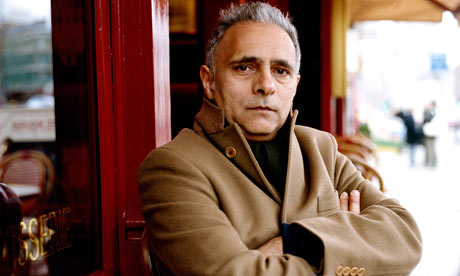
Kureishi was born in South London to a Pakistani father and an English mother. His father was
from a wealthy Madras family, most of whose members moved to Pakistan
after the Partition
of British India in
1947. After his parents married, the family settled in Bromley where Kureishi was born.
Contextual
information:-


Immigration in the 1960s. Britain saw the first
significant wave of immigrants in the late 1940s and carried on through to the
1960s (Caribbean, African and Asian). In the text Haroon and Anwar; faced a
“colour bar” in housing/employment.
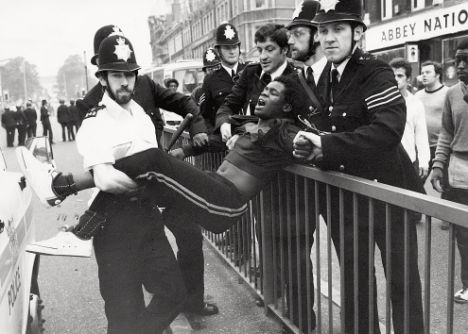


Around the same time Enoch Powell’s and “Rivers of
Blood” speech also criticized Commonwealth immigration: “Like the Roman, I seem
to see the river Tiber foaming with much blood.” (1968)
Kureishi’s novel is profoundly anti-Thatcherite and
argues against the idea of “domestic colonization.”
Narrative
devices:-
Bildungsroman
The novel is a coming of age novel tells the story of a first generation of British-born
immigrant coming of age and asserting their rights & culture. It is a
multicultural novel that signifies generational differences (e.g. between
Haroon vs Karim)
Themes:-
Race/ Racism/Resistance to Racism
Kureishi ionizes assumptions
of immigrants and “Pakis”:- (Haroon, Princess Jeeta offer different historical
contexts for racism). He also crosses racial lines: Allie, Charlie, Karim and
Jamila negate and offer alternative to Edward Said’s colonial discourse (Eva
exoticises this and Haroon exploits this).
Racial intermixing/ changing landscape of
Britain

Duncan Sandys (Conservative MP) said in the 1980s
that: “The breeding of millions of half-caste children would merely produce a
generation of misfits and create national tensions.” (1967)
Kureishi who himself was of mixed heritage, wrote in
reply: “I wasn’t a misfit, I could join
the elements of myself together. It was the others, they wanted misfits; they
wanted you to embody within yourself their ambivalence.” (Dreaming and Scheming,
27-8) In the novel Kuerishi reflects this defiance- (Karim says: “having emerged
from two old histories.” Page 3)
Racial prejudice & Stereotypes

Karim
asked to play Mowgli in his school play of the Jungle Boy: “You
were just pandering to prejudices” (p.152)
Class
There is a shifting meaning of class in Britain in
1960s and 1970s with increasing class divisions and social mobility in post-war
Britain.
“For immigrants and their families, disorder and
strangeness is the condition of their existence. They want a new life and the
material advancement that goes with it. But having been ripped from one world
and flung into another, what they also require, to keep everything together, is
tradition, habitual ideas, stasis. Life in the country you have left may move
on, but life in the diaspora is often held in strange suspension, as if the act
of moving has provided too much disturbance as it is.” -- Hanif Kureishi, Dreaming and Scheming (3)
Gender and
Sexuality/ crossing boundaries
The novel shows sexual experimentation and freedom from
strictures of gender roles and sexuality. (Depicted in Karim’s bisexuality and
mixed-race origins).
All in all resistance to racism is depicted through
crossing race/class/gender/sexual boundaries but at the same time it is
limited, so there is desire for greater historicisation of Britain and
immigrant histories to combat racism.
Alternative
identity
The novel shows a new way of being English: “That is,
it [Kureishi’s work] reconceives urban Englishness as a racially mixed,
erotically charged, and economically determined state of being; as a condition
of painful ambivalence […] ; as a mode of life encompassing both violence and
toleration, both cynicism and heartfelt commitment to “the new enterprise
culture.” From Jefferson Hunter, English Filming English Writing
(Indiana UP, 2010): 4-5
Further reading
Hanif Kureishi, Introduction to London Kills Me: x
Hanif Kureishi, Dreaming and Scheming
W.E.B. Dubois, The Souls
of Black Folk (1903)
Paul Gilroy, ‘There Ain’t No Black in the Union
Jack: The Cultural Politics of Race and Nation’ (1987)
From Jefferson Hunter, English Filming English
Writing (Indiana UP, 2010): 4-5
Ball, John Clement. "The Semi-Detached
Metropolis: Hanif Kureishi's London." ARIEL: A Review of International
English Literature. Vol 27, No 4 (October 1996): 7-27
Rushdie, Salman, Imaginary Homelands
Moore-Gilbert, Bart. Hanif Kureishi. (Manchester UP, 2002)
Edward
Said’s Orientalism.
Saturday, 15 September 2012
Season of Migration to the North
Author
Tayeb
Salih (1929-2009):

• Studied at the University of
Khartoum before leaving for the University of London in England.
• Came from a background of small
farmers and religious teachers
• Worked as a broadcaster
• Worked with UNESCO
About
the text:

<script src="//www.gmodules.com/ig/ifr?url=http://totalgta.net/igoogle/amazonsearch/amazonsearch.xml&synd=open&w=181&h=155&title=Amazon+Search+Sidebar+Gadget&border=%23ffffff%7C3px%2C1px+solid+%23999999&output=js"></script>
• 1966 novel – published in Beirut
in 1967
• Banned in Sudan
• Novel about two Sudanese men of
different generations, each of whom
• travels North for education in
England and returns to the Sudan
• Investigates colonial racism and
sexism
• Explores identity split between
West/East and North/South
Contextual
information:

• Sudan gained independence from
Egypt and the UK in 1956
• Novel returns to the colonial era:
The character Mustafa was born in Khartoum in 1898 (page 18), the year of the
bloody defeat of the Mahdist forces by Kitchener's army in the battle of
Omdurman, which signalled the final collapse of Sudanese resistance to British
encroachment.
Interesting
narrative techniques:
• Framed narrative
–
1001 Arabian Nights

– “Rime of the Ancient Mariner”

–
The Reluctant Fundamentalist

• Dislocations among spaces: England, Egypt and Sudan
• Use of Doppelgänger
• First-person perspective is turned
inward and registers a series of visions in which inner and outer realities are
often fused
• Relational stream-of-consciousness
•
Reference
to Othello
• Reference to Ford Madox Hueffer
(Ford)
Characterisation:
Doppelgänger:-

1. Mustafa Sa’eed
|
2. Primary narrator
|
• Studies and becomes a Lecturer in Economics at
University of London
• Nicknamed “the black Englishman”
• Drives three women to suicide and murders one
• Jailed for 7 years when he kills Jean Morris
• During a flood, disappears (presumed dead)
• Secret locked room that is a kind of shrine to
his English life/wife
|
•
Studies English poetry (doctorate)
•
Goes to Khartoum to teach
pre-Islamic Arabic poetry at the secondary school level
•
Later works as a bureaucrat in the
Education ministry in Khartoum
•
Falls in love with the widow of
Mustafa
•
Novel ends with him floating on the
Nile, yelling for help.
|
Themes:
Arab
Patriarchy:


• Whether
father, brother, or husband, man is guardian or master of woman and totally
controls her life. (From text: “Does she imagines she's some queen or princess?
Widows in this village are more common than empty bellies. She should thank God
she's found a husband like me .... She'll marry me whatever you [the narrator]
or she says or does. Her father's agreed and so have her brothers. ... In this
village the men are guardians of the women.” (pp. 97-98)
• Early
marriage is welcome to guarantee the bride's virginity, a symbol of family
honor. Forced marriages are customary and it is taken for granted that the girl
has no say in the choice of her husband. (Example from text- Hosna's father
promises her to Wad Rayyes, then swears at her and beats her until she yields
(p. 122). Mahjoub himself, the narrator's life-long friend and Hosna's former
playmate, says, "Women belong to men, and a man's a man even if he's
decrepit" (p. 99). /The narrator's mother also judges Hosna in the
following terms: "What an impudent hussy! That's modern women for
you!" (p. 123).
• Sexual
life and sexual fulfillment are therefore prohibited to women, while men
indulge in polygamy and concubinage.
• Indeed,
the circumcision of women is still practised and is often mentioned in Season
(p. 80 for example), curbing sexual desire in the woman. Salih and Mahfouz
dramatize this traditional outlook on marriage and sex in their novels.[1]
• In
the novel, Sudanese wife (Hosna Bint Mahmoud) is, however, left prey to the
sexual fancies of the much-married, 70-year-old Wad Rayes with the complicity
of the village patriarchy, she is forced into marriage while the narrator is
away in Khartoum and he sexually assaults her and she kills him and commits
suicide.
Cultural/Racial
Difference &
Sado-Masochistic Sex:
Sado-Masochistic Sex:

• “Just
as imperialism had violated its victims, Mustafa violates his, and his
unwitting lovers become sacrifices in his violent campaign. The acts of finding
lovers and engaging with them sexually become scouting operations and
skirmishes in a war fought on the personal level. The descriptions used by
Mustafa for his conquests are couched not only in terms of military operations
in general, but in terms of traditional Arab military campaigns in particular:
going to meet new victims is described in terms of saddling his camels; the
process of court-ship is compared to laying siege, involving tents, caravans,
the desert, and so forth. The imagery associated with sexual acts are those of
battle: bows, axes, spears, and especially swords and knives. He compares his
exploits to those of Tarik ibn-Ziyad, the commander of the Arab army that
conquered Spain in the eighth century, as he tells the narrator, ‘I imagined
the Arab soldiers' first meeting with Spain. Like me at this moment, sit-ting
opposite Isabella Seymour, a southern thirst being quenched in the northern
mountain passes of history’” (S, p. 46).
Source: Saree S. Makdisi, “The Empire Renarrated:
"Season of Migration to the North" and the Reinvention of the
Present,” Critical Inquiry, Vol. 18, No. 4, Identities (Summer, 1992),
p. 811.
Sexual
desire North/South:

• “In
her eyes I was a symbol of all her hankerings. I am south that yearns for the
North and the ice" (30).
• Mustafa
embodies an "icy" aura and contends to have no feelings or emotions,
just a heartless and reckless person.
• The
two aspects are present together in this passage dealing with a woman:
"...a southern thirst being dissipated in the mountain passes of history
in the north" (42).
Critical
perspectives:

• The translator, Denys
Johnson-Davies, says about the novel: “Season has been variously
described as an "Arabian Nights" in reverse, or as a story of a
modern-day Othello who seeks to turn the political tables on the West by
bedding as many of its women as he can.” (Johnson-Davies v)
Do you
agree with this statement?

• “Season is, generally, a novel, a form
imported by the Arabs from the West during the nineteenth and early twentieth
centuries when Europe and the Middle East confronted each other over issues of
culture, colonialism and curiosity. But
if Season is, by Western literary critical definitions, a novel, it
nonetheless participates as well in what, in Arabic literary terms is called
mu'aradah, literally opposition, contradiction, but here a formula whereby one
person will write a poem, and an-other will retaliate by writing along the same
lines, but reversing the meaning. Tayeb Salih's use of the
"novel" form might be taken as a practice of this sort. It is a
re-reading of Shakespeare's Othello, a restatement of the tragedy, a re-shaping
of the tragic figure of the Moor.”
Source:
Barbara Harlow, "Sentimental Orientalism: Season of Migration to the
North and Othello," Amyuni, p. 75.
Is it
a rewriting of Othello?
Season
of Migration to the North & Othello


Othello/
Desdemona
Sa’eed/
Isabella

There are
two direct references to Othello in the novel. The protagonist Sa'eed compares
himself to Othello as he talks to Isabella Seymour, an English woman whom he
seduces (she can be read as a Desdemona figure).
 Reference: “There came a moment when I felt I had been transformed in
her eyes into a naked, primitive creature, a spear in one hand and arrows in
the other, hunting elephants and lions in the jungles. This was fine. Curiosity
has changed to gaiety, and gaiety to sympathy, and when I stir the still pool
in the depths the sympathy will be transformed into a desire upon whose taut
strings I shall play as I wish. ‘What race are you?’ she asked me. ‘Are you
African or Asian?’ ‘I am like Othello-Arab-African,’ I said to her.” (Salih, Season
38)
Reference: “There came a moment when I felt I had been transformed in
her eyes into a naked, primitive creature, a spear in one hand and arrows in
the other, hunting elephants and lions in the jungles. This was fine. Curiosity
has changed to gaiety, and gaiety to sympathy, and when I stir the still pool
in the depths the sympathy will be transformed into a desire upon whose taut
strings I shall play as I wish. ‘What race are you?’ she asked me. ‘Are you
African or Asian?’ ‘I am like Othello-Arab-African,’ I said to her.” (Salih, Season
38)
Mustafa as Anti-Othello:

• He says: "I am no Othello: I am a lie," and that "I am no Othello:
Othello was a lie" (S, pp. 37, 98).
• Does not kill out of love
• Does not kill himself after he
kills the Desdemona figure
• Character seems to be all
intellect with no heart
• Masquerade: adopts various
identities with lovers: Richard, Hassan, Charles, Amin, and Mustafa
• Senses that he is wearing a mask
in the West, but also goes home and hides his identity – so he is in a constant
state of masquerade.
Open Ending:

• Image of the narrator as a kind of
compass on the river, floating (167). Perhaps the river represents the dying
waters of colonialism?
• He is filled with rage at
everything that has happened, and also at himself, so the narrator plunges into
the Nile. A “numbness” strikes him, “half-way between north and south”, leaving
him “unable to return” (167). From the water, he sees birds flying
“northwards”, perhaps in a “migration”, and he “wak[es] from the nightmare”
(168). He decides that there are things worth living for, and he shouts for
help (169).
• Fluid, uncertain ending.
[1] Source:
Mona Takieddine-Amyuni, “Images of Arab Women in Midaq Alley by Naguib Mahfouz,
and Season of Migration to the North by Tayeb Salih,” International Journal of
Middle East Studies, Vol. 17, No. 1 (Feb., 1985), pp. 25-36
Friday, 14 September 2012

Monday, 3 September 2012
FIRST IMPRESSIONS OF SAM
SELVON’S “THE LONELY LONDONERS”
(Sam Selvon, The Lonely Londoners. Edinburgh:
Longman, 1985).
<script src="//www.gmodules.com/ig/ifr?url=http://totalgta.net/igoogle/amazonsearch/amazonsearch.xml&synd=open&w=181&h=155&title=Amazon+Search+Sidebar+Gadget&border=%23ffffff%7C3px%2C1px+solid+%23999999&output=js"></script>
TALKING POINTS:
LANGUAGE
In The Lonely Londoners Selvon does not use
Standard English but vernacular Caribbean speech patterns. The Lonely Londoners opens up: “One grim winter evening, when it
had a kind of unrealness about London… Moses Aloetta hop on a number 46 bus at
the corner of Chepstow Road and Westbourne Grove to go to Waterloo to meet a
fellar who was coming from Trinidad on the boat-train.” (23) From the
beginning, Selvon weaves his narrative establishing the Caribbean dialect in
literary form. Furthermore by addressing his readers with a Trinidadian dialect
Selvon draws on the poetics of the
oral tradition, as the dialect has a musical air, evident in the rhythm
and rhyme of the lines.
NARRATIVE STYLE
Selvon’s
narrative style is very optimistic; it seems to echo the early, hopeful migrant
Calypso songs about London such as Lord Kitchener’s song, “London Is the Place
for Me”. Perhaps in an effect get the British public to sympathise with the
migrant experience?
IDENTITY & THE CITY
British identity
is reconstructed in the landscape of Britain, particularly London, as the
Caribbean migrants adapt but also introduced their own unique culture and
customs to the city. Selvon’s migrant characters rename landmark destinations
in their Caribbean vernacular so that familiar destinations, such as Notting
Hill, Marble Arch and Bayswater are reinvented.
The products
available are also another indication of the impact Caribbean migrants having
on the city as: “Before Jamaicans start to
invade Brit’n, it was a hell of a thing to pick up a piece of salt fish
anywhere, or to get thing like pepper sauce or dasheen or even garlic. . . But
now, papa! Shop all about start to take in stocks of foodstuffs what West
Indians like, and today is no trouble at all to get salt fish and rice.” (76)
RACISM & THE ‘OTHER’
In The Lonely Londoners the idea of the
migrant as an outsider is a recurrent theme, for example when Galahad pushes in
the queue and a lady says in response: “They’ll have to do better, you know.”
(44) The woman’s language creates an immediate binary between Galahad and
herself classing him as an outsider.
CALYPSO & MUSIC AS A UNIFIER
In The Lonely Londoners Calypso music plays
a very important part within the narrative. The Calypso music played at the
Fete, which is largely Caribbean event, is attended by a mix of people and
creates a convivial atmosphere. Thus the music acts as a bridge between
cultural and racial barriers.
MULTICULTURALISM, CULTURAL INTERMIXING
& MISCEGENATION
Racial
intermixing is rejected in The Lonely
Londoners, when “The father want to throw Bart out the house because he
don’t want no curly-hair children in the family” (65) but it is also
celebrated, as Moses describes: “Thus it was that Henry Oliver Esquire, alias
Sir Galahad, descend on London to swell the population by one, and eight and a half months later it had a
Galahad junior in Ladbroke Grove and all them English people stopping in the
road and admiring the baby curly hair when the mother pushing it in the
pram as she go shopping for rations” (35).
These images are a forecast of the changing face of Britain, since Britain
is now one of the most culturally diverse countries in the world.
FUTHER READING

Dyer,
Rebecca. “Immigration,
Postwar London, and the Politics of Everyday Life in Sam Selvon's Fiction.” Cultural
Critique No. 52, (Autumn 2002), 108-144.
Hall, Stuart. “Calypso Kings” Friday 28 June 2002. http://www.guardian.co.uk/culture/2002/jun/28/nottinghillcarnival2002.nottinghillcarnival
Proctor,
James. Writing Black Britain, 1948-98: An
Interdisciplinary Anthology. Manchester:
Manchester University Press, 2000.
Wambu, Onyekachi. Black British Literature since Windrush. http://www.bbc.co.uk/history/british/modern/literature_01.shtml.
EXPLORING THE POEMS IN LINTON KWESI
JOHNSON’S “MI REVALUESHANARY FREN: SELECTED POEMS”
AUTHOR

Linton Kwesi Johnson (aka LKJ) was born in Jamaica, 24 August 1952. He is a UK-based dub
poet. In 2002 he became the second
living poet, and the only black poet, to be published in the Penguin
Modern Classics series.
Most of Johnson's poetry is political, dealing mainly with the experiences of
being an African-Caribbean in Britain. His performance poetry involves the
recitation of his own verse in Jamaican
Patois over dub-reggae. His
performances can be found on YouTube.
“FIVE NIGHTS OF BLEEDING”
Poem
is written in a hybrid Jamaican dialect; consisting of a mixture of Jamaican
and English, known as “Creole”.
It
offers a more expansive notion of British identity through the reconstruction
of the urban British landscape. LKJ deliberately takes the reader through
highly concentrated Afro-Caribbean areas, such as Brixton and Sheppard’s Bush
to draw attention to the strong Afro-Caribbean presence.
The
poem also holds violent images: “cold blades as sharp as the eyes of hate” and
repeated utterances of “madness…madness…war.” It could be argued that these are
violent and possessive images, reminiscent of the violent colonial practices
employed by empirical powers to take possession of nations.
“IT DREAD INNNA INGLAN”
Poem is also written in the
same style of “Five nights of Bleeding.” Apparently LKJ wrote it after Margret
Thatcher won the election, so could be seen as a response to Margaret
Thatcher’s ‘swamping’ speech. LKJ mockingly addresses “Maggi Tacha” and calls
on all British migrants, from “African/Asian/ West Indian/ an Black British”,
to “stan firm inna Inglan”, declaring “we are here to stay”. In this poem LKJ
offers a diverse representation of British identity, uniting the perceived
outsiders and resolving his racist opponents to the status of the nameless
‘other’.
“FORCES OF VICTRI”
LKJ was politically involved
in the carnival movement and wrote the poem, “Forces of Victri”, to celebrate
the continuation of the Noting Hill Carnival. The poem begins: “We’re di forces
af vicri/ An wi comin rite
through/ We’re di forces af victri/ Now was yu gonna do”. The poem has echoes
of a defiant protest chant. The poem also has an evident rhyme and rhythm
pattern, which makes the tone very challenging, with the Creole vernacular also
enhancing the challenging sentiments.
FUTHER READING
D’ Aguiar, Fred. Introduction in Mi Revalueshanary Fren: Selected poems, Linton Kwesi Johnson.
London: Penguin Classics, 2002.
Dawson, Ashley. Mongrel Nation: Diasporic Culture and the Making of
Postcolonial Britain. Ann Arbor: The University of Michigan Press, 2007.
Hall, Stuart. “Calypso
Kings” Friday
28 June 2002. http://www.guardian.co.uk/culture/2002/jun/28/nottinghillcarnival2002.nottinghillcarnival
Proctor, James. Writing Black
Britain, 1948-98: An Interdisciplinary Anthology. Manchester: Manchester University Press, 2000.
Subscribe to:
Posts (Atom)