Showing posts with label Literature. Show all posts
Showing posts with label Literature. Show all posts
Tuesday, 20 May 2014

Saturday, 26 October 2013
Wuthering Heights Ooops I Mean Twilight!
Although I will be reviewing Twilight, a stand alone text in a separate post, this post is more about the stark similarities between Stephenie Meyer's Twilight and Emily Bronte's Wuthering Heights, so let the comparisons begin:
Apparently the story of Twilight came to Stephenie Meyer in a dream. However, after finishing this veritable tombe of teenage angst and empty melodrama I have my suspicions that this dream was induced after Mrs Myer finished reading or watching Emily Bronte's Wuthering Heights. For anyone like me, who had the misfortune to read that awful book for A level English, the strong similarities with Bronte's novel are far from welcome ones.
Characters:
Bella/ Cathy
Edward/Heathcliff
Jacob/Linton
Jumble these names up a bit, give them sharp incisors and we have Twilight.
Bella/ Cathy
Our protagonist is Bella Swan who we can presume, since she is stuck between two guys, is the Cathy figure in Meyer's text. Unfortunately this is where the similarities between the two characters end. While Cathy is portrayed and actively demonstrates that she is a strong, wilful character (i.e. by making her own choices, selfish as they may seem) Bella on the other hand is happy to sit back in relative inferiority and let her over-protective vamp boyfriend make all her decisions (this is where feminism takes a beating).
Edward/ Heathcliff
Strangely I liked the Heathcliff in Bronte's novel, although he seemed quite dangerous and animalistic, there seemed to be a kind of vulnerability about him. Come on! He was possibly abandoned by his family and so has no real roots except that is Cathy, so we can cut him a little slack when he gets finds that the love of his life, his 'soul mate' has married another. Alas Meyer's Edward has no such real depth, despite being similar to the 'monster-like' Heathcliff -simply because he is a monster, with him being a vamp and all- there is no real substance beneath the model-like looks (despite Meyer half-heartedly trying to throw in some cliche history of him coming from England) in the end he's more vanilla than Cathy's rich husband, Linton.
Jacob/ Linton
Hmmmm! Not much similarities here except their both second best so I feel sorry for them both. Jacob is clearly meant to be portrayed as a hot than hot werewolf and of course like all the attractive guys in Forks he inevitably fall for Bella because....? Honestly I don't know why he falls for her or why Edward does for that matter (except in Edward's case it's kinda explained through the fact that he likes her smell.....? Ok so that's not weird at all). Anway Jacob seems to genuinely like Bella and they have very normal albeit boring and awkward conversations where Jacob tries to make a move on Bella, she keeps knocking him back and he bounces back to her like an eager puppy determined to be loved.
Setting: The Moors/ Forks
The depressing rainy setting of Twilight's setting, Forks took me back to the depressing, rainy moors that Heathcliff and Cathy loved so much. Just thinking about it gives me chills- and not in a good way.
The Romance:
Cathy + Heathcliff
vs.
Bella + Edward
I never understood as to why Cathy and Heathcliff's romance was considered comparable to the greatest literary romances of all time (like Romeo and Juliet, Elizabeth and Mr Darcy, Margaret Hale and Mr Thornton and so on). Both Cathy and Heathcliff are incredibly selfish (see Cathy's stupid decision to marry Linton even though she declares Heathcliff as her soul mate), self-destructive (particularly Cathy who although has made her choice to marry Linton, so she can live comfortably, annoyingly continues to bitch and moan and simply won't lie in the bed she made, instead continuing to try and have both her lovers within reach), cruel (both Heathcliff and Cathy are mean to animals and the people around them) and finally they are downright annoying with their tragically forced tale of woe and heartbreak- these two take brooding to a whole new level.
Bella and Edward's relationship is equally self destructive and disturbing. Most of the story is Edward trying to tell Bella that they can't be together; mostly because if they do become a couple he'll lose control and end up biting her and sucking her dry because he's a vampire and she has nice smelling blood or something. Oooh I forgot to mention he can also read minds- yep he's Mystic Meg or something- however he cannot read Bella's mind (lucky for her as all he'd probably hear a variation of "OOOH Sparkly!"or "EEEK! I don't care if he kills me he's just so damn hot *drool*" Then her boring ass would get dropped before her drool touches the floor.Another thing which is equally disturbing and comparable to Wuthering Heights is the fact that Cathy's dead= while Edward is the undead and just as Cathy appears as a ghost and tries to get through the window of her bedroom= in turn Edward seems to creepily watch and enter Bella's room through her window. I'm going to assume that the window is the threshold to the supernatural world.
Anyway I'm going to end it here. If you have spotted any Wuthering Heights similarities I would love to hear about them so drop me a comment below. Thanks.
Apparently the story of Twilight came to Stephenie Meyer in a dream. However, after finishing this veritable tombe of teenage angst and empty melodrama I have my suspicions that this dream was induced after Mrs Myer finished reading or watching Emily Bronte's Wuthering Heights. For anyone like me, who had the misfortune to read that awful book for A level English, the strong similarities with Bronte's novel are far from welcome ones.
 |
| Replace the soda can with a copy of Wuthering Heights and you'll understand how I feel |
Characters:
Bella/ Cathy
Edward/Heathcliff
Jacob/Linton
Jumble these names up a bit, give them sharp incisors and we have Twilight.
Bella/ Cathy
Our protagonist is Bella Swan who we can presume, since she is stuck between two guys, is the Cathy figure in Meyer's text. Unfortunately this is where the similarities between the two characters end. While Cathy is portrayed and actively demonstrates that she is a strong, wilful character (i.e. by making her own choices, selfish as they may seem) Bella on the other hand is happy to sit back in relative inferiority and let her over-protective vamp boyfriend make all her decisions (this is where feminism takes a beating).
 |
| Bella fulfilling her potential |
Edward/ Heathcliff
Strangely I liked the Heathcliff in Bronte's novel, although he seemed quite dangerous and animalistic, there seemed to be a kind of vulnerability about him. Come on! He was possibly abandoned by his family and so has no real roots except that is Cathy, so we can cut him a little slack when he gets finds that the love of his life, his 'soul mate' has married another. Alas Meyer's Edward has no such real depth, despite being similar to the 'monster-like' Heathcliff -simply because he is a monster, with him being a vamp and all- there is no real substance beneath the model-like looks (despite Meyer half-heartedly trying to throw in some cliche history of him coming from England) in the end he's more vanilla than Cathy's rich husband, Linton.
 |
| Even Alice is bored but to be fair she is used to talking rabbits. |
Jacob/ Linton
Hmmmm! Not much similarities here except their both second best so I feel sorry for them both. Jacob is clearly meant to be portrayed as a hot than hot werewolf and of course like all the attractive guys in Forks he inevitably fall for Bella because....? Honestly I don't know why he falls for her or why Edward does for that matter (except in Edward's case it's kinda explained through the fact that he likes her smell.....? Ok so that's not weird at all). Anway Jacob seems to genuinely like Bella and they have very normal albeit boring and awkward conversations where Jacob tries to make a move on Bella, she keeps knocking him back and he bounces back to her like an eager puppy determined to be loved.
Setting: The Moors/ Forks
The depressing rainy setting of Twilight's setting, Forks took me back to the depressing, rainy moors that Heathcliff and Cathy loved so much. Just thinking about it gives me chills- and not in a good way.
The Romance:
Cathy + Heathcliff
vs.
Bella + Edward
I never understood as to why Cathy and Heathcliff's romance was considered comparable to the greatest literary romances of all time (like Romeo and Juliet, Elizabeth and Mr Darcy, Margaret Hale and Mr Thornton and so on). Both Cathy and Heathcliff are incredibly selfish (see Cathy's stupid decision to marry Linton even though she declares Heathcliff as her soul mate), self-destructive (particularly Cathy who although has made her choice to marry Linton, so she can live comfortably, annoyingly continues to bitch and moan and simply won't lie in the bed she made, instead continuing to try and have both her lovers within reach), cruel (both Heathcliff and Cathy are mean to animals and the people around them) and finally they are downright annoying with their tragically forced tale of woe and heartbreak- these two take brooding to a whole new level.
Bella and Edward's relationship is equally self destructive and disturbing. Most of the story is Edward trying to tell Bella that they can't be together; mostly because if they do become a couple he'll lose control and end up biting her and sucking her dry because he's a vampire and she has nice smelling blood or something. Oooh I forgot to mention he can also read minds- yep he's Mystic Meg or something- however he cannot read Bella's mind (lucky for her as all he'd probably hear a variation of "OOOH Sparkly!"or "EEEK! I don't care if he kills me he's just so damn hot *drool*" Then her boring ass would get dropped before her drool touches the floor.Another thing which is equally disturbing and comparable to Wuthering Heights is the fact that Cathy's dead= while Edward is the undead and just as Cathy appears as a ghost and tries to get through the window of her bedroom= in turn Edward seems to creepily watch and enter Bella's room through her window. I'm going to assume that the window is the threshold to the supernatural world.
Anyway I'm going to end it here. If you have spotted any Wuthering Heights similarities I would love to hear about them so drop me a comment below. Thanks.
Was Joseph Conrad a racist?
Was Joseph Conrad a racist, more specifically does his novel Heart of Darkness reveal him as a racist? Below is an essay, written by me, very inadequately exploring that very question:
Achebe, Chinua. "An Image of Africa:
Racism in Conrad's 'Heart of Darkness'" Massachusetts London
Joseph Conrad’s Heart of Darkness is a product of the
experiences of Conrad’s six-month visit to the Congo Free
State in 1890, which are related by Conrad through the character
of Marlow, who retraces Conrad’s footsteps. When Heart of Darkness was first published, in 1902 “as a three- part
series in Blackwood’s Edinburgh Magazine”[1]
few actually spoke about it. Compared to the popularity Conrad received from
his story, Youth, which fit into the
canon of Victorian adventure stories of the time, such as Treasure Island . It wasn’t
until “the late 1950s and 1960s peaking in the late 1970s”[2]
that Heart of Darkness gained
attention. The novel is known for the notable attention it gained from Nigerian
novelist, Chinua Achebe who provoked many responses when he attacked the novel
for being racist. Thus this essay will look at how Heart of Darkness explores and negotiates race and racism by
looking at the representations of both Africa
and African people and whether these representations are in fact racist.
In some aspects it can be said that Conrad’s
portrayal of the Congolese people, in the novel, is indeed racist. This can be
seen in the imagery Conrad uses to describe them, as Marlow expresses, “It was
unearthly and the men were…No they were no inhuman. Well, you know, that was
the worst of it – the suspicion of their not being inhuman. It would come
slowly to one. They howled and leaped and spun and made horrid faces, but what
thrilled you was the thought of their humanity – like yours – the thought of
your remote kinship to this wild and passionate uproar.”[3] This
quote clearly paints the African’s as primitive to the point that their
humanity is questioned, it perpetuates offensive image of Africa
and the African people, as the “Other” separate and inferior from himself and
the civilized West.
Furthermore there is the arrogant,
underlying imperial ideology, in Conrad’s discourse, that the African’s are
indeed in need of racial improvement. This view can be seen in the description
of an African man, as “an improved specimen; [who] could fire up a vertical
boiler. He was there below me and, upon my word, to look at him was as edifying
as seeing a dog in a parody of breeches and a feather hat, walking on his hind
legs.” (p.51). This quote displays the “imperial[ist] ideology, which
encouraged colonial powers to take up the “white man’s burden” and raise up the
condition of the inferior races”[4],
which is quite clearly derogatory and racist, as Conrad dehumanizes and
denigrates the African intellect.
Similarly, the language in Heart of Darkness can also be seen as
racist, especially, as Achebe cited, through the noticeable repetition of
“darkness.” Achebe pronounced Conrad’s use of the word “darkness” is used derogatorily
to describe Africa, as Europe ’s “primordial
relative.”[5] I tend to agree that the repetition of the word is a form
of unconscious racism, which associates white with all things good and pure and
black with all things bad, uncivilized and demonic.
Furthermore, Heart of Darkness is not only racist but it also betrays
xenophobia, through Marlow and the pilgrims’, towards African cultures and
customs, as Conrad wrote, “The earth for us is a place to live in, where we
must put up with sights, with sounds, with smells, too, by Jove! - breathe dead
hippo, so to speak, and not be contaminated.” (p.69) Although he preaches
tolerance, he also suggests that contamination is possible through the
interaction of the dominant European culture, with different cultures. There is
also a sense of underlying fear that runs thought the novel of unexplained
practises by the African’s, such as re-occurrence of the “roll of drums”(p.49),
in the forest and the supposed witchcraft and cannibalism. These practices
scare Marlow and the pilgrims’ not only because they lack the cultural
knowledge to understand these practises but also because it is not in line with
their culture, which is the dominant culture.
This dominant culture relies not only on
the established of the notion of race, which involves the “classification for
human beings into physically, biologically and genetically distinct groups”[6]
but it also involves looking at cultural practices which are not favourable and
imposing their dominant culture upon the inferior culture, with the perceived
notion their culture is superior. This can be seen happening in Heart of
Darkness, where they train an African man to fire up a boiler and also in their
failed attempt to build roads but also closer to home in Ireland as “the Irish
were initially seen to be physically much the same as the English, [but] Irish
culture was [seen as] alien and threatening.”[7] And where a culture is seen as unfavourable
it is usually squashed by the West through violence, as Samuel P. Huntington
said: “The West won the world not by the superiority of its ideas or values or
religion but rather by its superiority in applying organised violence.
Westerners often forget this fact, non-westerners never do.”[8]
On the other hand Conrad’s Heart of Darkness can be seen a
deliberate racism with the intent to provide a critique on the western claim to
superiority. While some cite the racism in Conrad’s Heart of Darkness as a direct result of Conrad being a product of
Western culture, which propagates the idea of the superiority of white culture
through books and even science, which is seen in the novel where the doctor
“measure[s] the crania of those going out [to the Congo]”.(p.15) Conrad could
be seen as contesting this assumed power by presenting all the West’s racially
prejudiced views in full and showing them that to take away land “from those
who have a different complexion or slightly flatter noses is not a pretty thing
when you look into it too much.” (p.8) Conrad also shows this through Marlow’s
lack of answers from Kurt, as Marlow finds that there is no ‘redeemable idea’ (p.8)
that can justify the kind of behaviour occurring in the Congo .
This is further shown through the stories
attempt to challenge the savagery of the African culture, when Marlow reminds
us at the beginning that England must have seemed savage and barbaric to the Roman’s,
who saw it as nothing but a black space to be conquered. But also in Kurt’s
report that the whites themselves “must necessarily appear to them [savages].”(p.70)
Conrad shows the reader that culture is relative and in the end it is not
culture which makes people savage but the actions of people who try to exploit
and conquer those for their own ends, like Europe has done to Africa .
This idea is epitomized in the character of Kurtz, where it is not his
engagement with African culture that kills him but his fanatic obsession with
“[his] ivory” (p.68).
Alternatively, the use of the word
“darkness” can also be said not to carry racist implications, used to debase Africa and its people, as Achebe alleged. Since, the word
is used, not only when Marlow is in Africa but also used in the story to
describe England , at the
beginning and is also repeated at the end when Marlow is in London to see Kurt’s widow, where Marlow
comments, “The darkness deepened” (p.107). This ending is key to the
understanding the use of “darkness”, as the room becomes oppressive and “The
darkness deepen[s]” (p.107) Marlow has two choices, to either tell Kurt’s wife
the truth about his last words and tell her the whole story or to just lie and
leave. Although Feminists would argue that Marlow’s choice to lie, is patronizing
and perpetuates the fragile female stereotypes who are “out of touch with the
truth” (16) and should be protected. An alternative response is that, Marlow
choose the easy way out in an attempt to get away and leave behind the whole
dark corrupt business of taking people’s land, enslaving and killing them. Thus,
the darkness can be seen as a symbolic shadow that hangs over the whole
business of colonization and of the moral corruption Marlow has suffered from
witnessing this exploitation.
Additionally, Conrad can be seen to
sympathise with the “unrestrained grief” (p.60) African’s suffer under
imperialism, perhaps because as some post-colonialists suggest; Conrad himself
suffered from displacement, as a child, from his homeland, Poland . Thus
post-colonialists attribute the ambiguity of the novel to Conrad’s own
ambiguous nationality. Then again, the ambiguity of the novel and in particular
its language could be credited to Conrad’s desire to relate the tale of his
journey faithfully, including the thoughts he had when he suffered from a
fever. Marlow relates, “I positively hoped, that my aspect was not so- what
shall we say?- so unappetizing” (p.58). This delirious admission shows that perhaps
at times Conrad, as Marlow, is an unreliable narrator, as Conrad “suffered
psychological, spiritual, even metaphysical shock in the Congo, and his
physical health was also damaged; for the rest of his life, he was racked by
recurrent fever and gout”[9]
Thus perhaps his representation of events are skewered.
To conclude, although I agree that in some
cases Conrad shows a lack of care for the African plight and displays typical
western racism of that time. However I think that it is only a small part of
the picture and to focus on this feature would obscure the message. I believe
that Heart of Darkness is ultimately
not a novel that serves to degrade Africa but in fact it uses Africa, as a pawn,
to reflect back upon the west’s imperialist attitudes and behaviour towards the
colonized. As ultimately the prominent feeling after reading the novel is not
shock of the African’s behaviour but that of the West.
BIBLIOGRAPHY
Primary Texts
Conrad,
Joseph Heart of Darkness, London
Secondary Sources
Ashcroft,
Bill. Gareth Griffiths and Helen Tiffin, Post-colonial
Studies: The Key Concepts. London
Bloom,
Harold. Joseph Conrad’s Heart of Darkness
Bloom’s Guides. New York
Encyclopaedia
Britannia: Joseph Conrad Biography, http://www.library.eb.co.uk/comptons/article
9273778?query=joseaph%20conrad&ct=ebi (accessed: November 8,
2010).
Young,
Robert J. C. Post-colonialism A Very
Short Introduction. Oxford University
[1] Harold Bloom, Joseph Conrad’s Heart of Darkness Bloom’s Guides (New York
[2] ibid., 17.
[4] Bill Ashcroft, Gareth
Griffiths and Helen Tiffin, Post-colonial
Studies: The Key Concepts (London
[5] Chinua Achebe. “An Image of Africa :
Racism in Conrad’s ‘Heart of Darkness’” Massachusetts Review. 18.1977 Rpt. In
Heart of Darkness, An Authoritative text,
Background and Sources Criticism. 1961. 3rd ed. Robert
Kimbrough, (London: W. W Norton Co., 1988), 251.
[6] Bill Ashcroft, Gareth
Griffiths and Helen Tiffin, Post-colonial
Studies: The Key Concepts (London
[7] ibid., 198.
[8] Robert J. C. Young, Post-colonialism A Very Short Introduction (Oxford University
[9] Encyclopaedia Britannia:
Joseph Conrad Biography, http://www.library.eb.co.uk/comptons/article
9273778?query=joseaph%20conrad&ct=ebi (accessed: November 8,
2010).
Friday, 25 October 2013
Graham Greene Binge...
“Innocence is a kind of insanity”  |
| The Power and the Glory |
Reading:
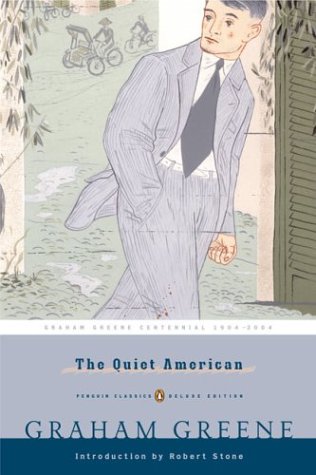 |
| The Quiet American |
“You cannot control what you love--you watch it driving recklessly towards the broken bridge, the torn-up track, the horror of seventy years ahead.”
 |
| Greene's The Heart of the Matter |
 |
| Greene's Stamboul Train |
“She thought for the first time, with happiness: perhaps I have a life in people's minds when I am not there to be seen or talked to.”
 |
| Brighton Rock |
“You cannot conceive, nor can I, of the appalling strangeness of the mercy of God.”
Sunday, 30 December 2012

Thomas Hardy's:
1. The Self-Unseeing
2. Here is the ancient floor,
3. Footworn and hollowed and thin,
4. Here was the former door
5. Where the dead feet walked in.
6. She sat here in her chair,
7. Smiling into the fire;
8. He who played stood there,
9. Bowing it higher and higher.
10. Childlike, I danced in a dream;
11. Blessings emblazoned that day;
12. Everything glowed with a gleam;
13. Yet we were looking away!
Source
http://www.scribd.com/doc/22128567/The-Self-Unseeing-analysis
Stanza 1
2. It is a memory, past tense.
3. 'and' emphasized movement of people.
Stanza 2
5- 9 His father is dead....His mother is dead (line 6)...The people who once walked there are now dead.
5. Merging of past and present, life is transitory, doesn't stay the same, rhythm is stressed.
8-9 Music getting higher and higher, excitement building.
Stanza 3
10-13. He was so wrapped up in his happiness that he didn't see the bad things coming. Although he can remember their happiness of singing and playing and time would move on, the early part of his life and memories would be tainted by the echoes of present deaths/ Contrast of life and death and well as past and present.
2. It is a memory, past tense.
3. 'and' emphasized movement of people.
Stanza 2
5- 9 His father is dead....His mother is dead (line 6)...The people who once walked there are now dead.
5. Merging of past and present, life is transitory, doesn't stay the same, rhythm is stressed.
8-9 Music getting higher and higher, excitement building.
Stanza 3
10-13. He was so wrapped up in his happiness that he didn't see the bad things coming. Although he can remember their happiness of singing and playing and time would move on, the early part of his life and memories would be tainted by the echoes of present deaths/ Contrast of life and death and well as past and present.
Monday, 26 November 2012
Thomas Hardy's:
1. Hap
2. If but some vengeful god would call to me
3. From up the sky, and laugh: "Thou suffering thing,
4. Know that thy sorrow is my ecstasy,
5. That thy love's loss is my hate's profiting!"
6. Then would I bear, and clench myself, and die,
7. Steeled by the sense of ire unmerited;
8. Half-eased, too, that a Powerfuller than I
9. Had willed and meted me the tears I shed.
10. But not so. How arrives it joy lies slain,
11. And why unblooms the best hope ever sown?
12. --Crass Casualty obstructs the sun and rain,
13. And dicing Time for gladness casts a moan....
14. These purblind Doomsters had as readily strown
15. Blisses about my pilgrimage as pain.
written in 1866
Explanation of lines 1-15:
1. 'Hap' means chance, from 'perhaps'.
2. Religion is the main theme in the poem, Hardy questions God's place in his life. He explores his loss of faith, which stems from the pain he has handled in his life. He imagines there is a God that enjoys our suffering, a God he refers to as 'vengeful'. (*notice how he has put God with a small 'g' why do you think he has done this?)
3. Presents imagery of God laughing and mocking. He goes on to present opposing ideas from line 3 where he imagines God is apparently saying "'Thou suffering thing.... (-to line 4)...know that thy sorrow is my ecstasy, " as if God is taking pleasure in his pain.
4. Note the juxtaposition and binary feelings of "sorrow" and "ecstasy", from one extreme emotion to another.
5. In a way Hardy is looking for a reason as to why he feels pain and one explanation he imagines in this poem is a vengeful God. In this lines note the alliteration of "love's loss", as well as the whole line "That thy love's loss is my hate's profiting!" The wrath and vengeance he imagines God is imbued with is emphasised in this sentence. ("love's loss" is a reference to Hardy's loss of his wife)
Stanza 2
Line 6. In this line Hardy is resolved to cope with and "bear" the pain, he would "clench [himself], and die"- it is a list of three and it is a line which sounds as if it is has come from the bible- as if he is consoling himself or bracing himself against the pain to come.
7. In this sentence he feels a righteous anger which he uses as a coping mechanism.
Stanza 2
Line 6. In this line Hardy is resolved to cope with and "bear" the pain, he would "clench [himself], and die"- it is a list of three and it is a line which sounds as if it is has come from the bible- as if he is consoling himself or bracing himself against the pain to come.
7. In this sentence he feels a righteous anger which he uses as a coping mechanism.
8. He is "[h]alf- eased" or comforted by the fact that there is a power who has given him those tears.
9. God has 'meted' or given him the tears to express his grief.
Stanza 3
Line 10. In this stanza he disregards all his previous exclamations and philosophies with the words "But not so."- he draws a line under all he has said and contradicts it all before expressing confusion. It is like the poem is the ramblings of a mind who has undergone a recent bereavement and is now in two minds about how to handle the grief. There is a personification of joy as it is killed or "slain", Hardy seems to be saying that if you understand joy as a person you can feel how much pain he is going through because joy is the binary emotion to pain.
11. In this line he poses a question and the image of the flower is presented as a representation of his hope, he questions: why take away his hope that was once restored? Why shrivel his hope? Why is his life like this and does God have a hand in his life?
12. The word "Casualty" in this sentence conjures up all the ideas of emergency, accidents, death etc. Also note the alliteration and personification of "Crass Casualty", which seems to emphasise the impending, overshadowing sense of doom he feels in his life as it obstructs the "sun and rain"- which are symbols of life.
13. "dicing time" conjures up "dice", gambling and probability of everything in life, especially the unpredictability of life, in that you can die at any moment.
Lines 14- 15. The sonnet ends the sentiment that; just as easy as he can feel joy Hardy can equally feel pain just as easily. Pain is pilgrimage a part of life, something that is universal, that everyone must go through, in religious terms it is like "pilgrimage" that everyone must go through. (note the contrasting emotions of "Blisses" and "pain" in the same sentence, could this be the "heaven" and "hell", the "heads" or "tails", the "good" and the "bad" that features in every life?)
Key words: God, luck, fate, chance, life + death.
9. God has 'meted' or given him the tears to express his grief.
Stanza 3
Line 10. In this stanza he disregards all his previous exclamations and philosophies with the words "But not so."- he draws a line under all he has said and contradicts it all before expressing confusion. It is like the poem is the ramblings of a mind who has undergone a recent bereavement and is now in two minds about how to handle the grief. There is a personification of joy as it is killed or "slain", Hardy seems to be saying that if you understand joy as a person you can feel how much pain he is going through because joy is the binary emotion to pain.
11. In this line he poses a question and the image of the flower is presented as a representation of his hope, he questions: why take away his hope that was once restored? Why shrivel his hope? Why is his life like this and does God have a hand in his life?
12. The word "Casualty" in this sentence conjures up all the ideas of emergency, accidents, death etc. Also note the alliteration and personification of "Crass Casualty", which seems to emphasise the impending, overshadowing sense of doom he feels in his life as it obstructs the "sun and rain"- which are symbols of life.
13. "dicing time" conjures up "dice", gambling and probability of everything in life, especially the unpredictability of life, in that you can die at any moment.
Lines 14- 15. The sonnet ends the sentiment that; just as easy as he can feel joy Hardy can equally feel pain just as easily. Pain is pilgrimage a part of life, something that is universal, that everyone must go through, in religious terms it is like "pilgrimage" that everyone must go through. (note the contrasting emotions of "Blisses" and "pain" in the same sentence, could this be the "heaven" and "hell", the "heads" or "tails", the "good" and the "bad" that features in every life?)
Key words: God, luck, fate, chance, life + death.
Tuesday, 16 October 2012
Notable characteristics of the modern novel:


.jpg/200px-Atonement_(novel).jpg)
- Fragmentary form, eclectic and collaged
- Cross genre and multi-genre
- Addressing issues of style and form
- Considering varieties of forms of language
- Using stories within stories
- Unreliable narrator
- Variety of narrators
- Concerned with perception and point of view
- Questioning received ideas and the notion of 'truth'
- Cross cultural
- Allusive
- Playing with- and concerned with issues to do with- time
- Exploring- re-writing and questioning- history
- Including some kind of social commentary or criticism
- Looking at themes to do with memory, identity, and community
- Open endings
- Multiple endings
- Making the reader work

Friday, 28 September 2012
Devil
in a Blue Dress
Exploring the film and the book
The Crime Novel Goes to the
Movies:
The Classical Detective Novel,
the Hard-boiled Tradition and Noir


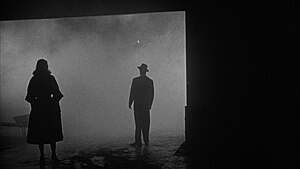
THE FILM:
(Director:-) Carl Franklin’s
Devil in a Blue Dress (1995)

Casting: Denzel Washington as Easy Rawlins, Jennifer Beals as Daphne Monet and Don Cheadle as Mouse.
Film grossed about 16 million and cost around 22 million to make (which meant that plans to film other books were dropped)
Carl Franklin took inspiration from noir films, such as The Big Sleep, but introduced African-American vernacular in terms of visuals, music and artistic references
Franklin says: “Courage leads to freedom” was the motto of the film. Thus he sees the film as a story of a man who overcomes fear to get his piece of the American dream who navigates relations to the underworld and comes out a stronger capitalist who goes into business for himself.
SETTING & ATMOSPHERE
The Los Angeles Public library put out an exhibit: “Shades of Los Angeles: A Search for Visual Ethnic and Cultural History”, which displayed 500 photos of Los Angeles from the 1890’s to 1950’s:- the stills were a source for the film and depictions of streets, houses and people. (Where to find the photos:

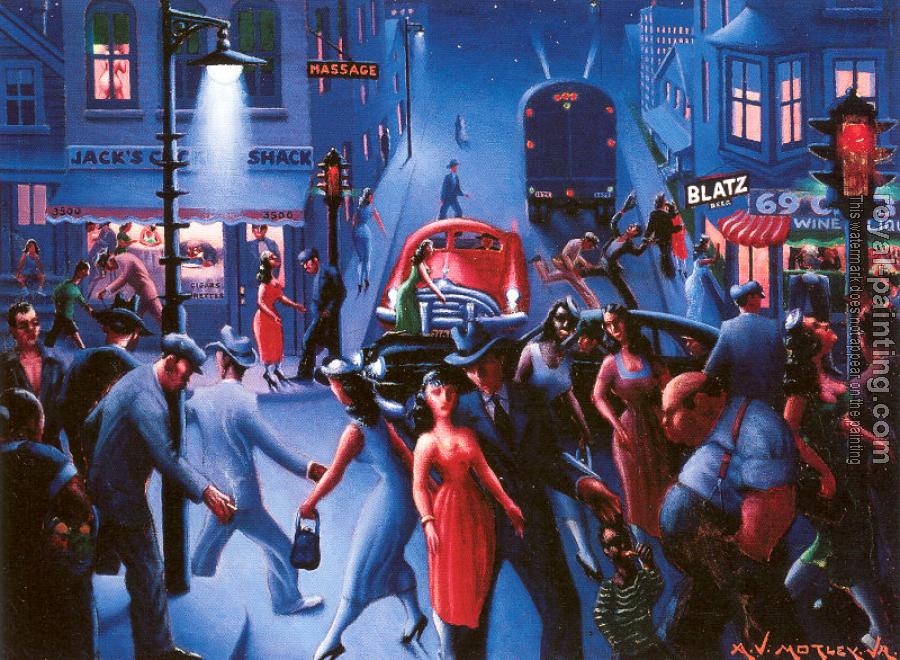

1940s Culture of blues, jazz and swing


Carl Franklin‘s Daphne Monet vs. Walter Mosley's Daphne Monet:
| Jennifer Beals playing Daphne Monet in Franklin's film. |
 |
| An image that matches Mosley's description of his character- Daphne Monet. |
•In Mosley’s novel, Daphne Monet has light brown hair – almost blonde – and eyes that are green or blue depending on the way she moves her head.
To what extent is Jennifer Beals’ embodiment of Daphne a departure from the novel’s description of her? What does this representation of Monet tell us about Franklin’s rewriting of the character? What are his racial and sexual politics?
THE BOOK:-
ABOUT THE AUTHOR:-
Walter Mosley

Born in 1952, African-American father and Jewish-American mother.
Worked in the IT sector through the first half of the 1980’s and quit when he decided to become a full-time writer .
Has said that Alice Walker’s The Color Purple (1982) inspired him to begin writing .
Set in 1948, Devil in a Blue Dress (1990), is the first in the Easy Rawlins series: a detective series in the style of Chandler with interest in issues of race and gender . The character of Easy Rawlins is partly based on Mosley’s father who served in the army during WWII and lived in L.A. during the post-war period. The series tells the history of the community from the post-war period in Los Angeles through the McCarthy era and civil rights and set against the backdrop of the Watts riots.

GENRE:- Novel takes the structure of the classical Detective Novel, The Hard-boiled genre and the characteristics of (film) Noir.
In the novel one mystery leads to another as secrets are uncovered. There is a strong emphasis on instinct, lack of ease and ambiguity. The social order cannot be restored.
Q: How does the mystery under investigation serve to expose other crimes or acts of violence in the United States?
MAIN CHARACTER:- Easy Rawlins

Depicted as a Migrant who has moved from Texas to Watts (along with many others) .
He served in WWII and was witness to genocide and racism. He came to see himself as an American citizen during WWII and through service to his country.
Post-War: he comes back to a segregated society and he wants his piece of the American dream, which for him means owning a house and garden (Chapter 3).
THEMES
Race & Devil in the Blue Dress
There is a sense that the Black American's identity is uncertain, they are not considered American and do not feel that they are. W. E. B Du Bois The Souls of Black Folk (1903) "One ever feels his twoness, - an American, a Negro; two souls, two thoughts, two unreconciled strivings; two warring ideals in one dark body, whose dogged strength alone keeps it from being torn asunder.”
There is a sense that the Black American's identity is uncertain, they are not considered American and do not feel that they are. W. E. B Du Bois The Souls of Black Folk (1903) "One ever feels his twoness, - an American, a Negro; two souls, two thoughts, two unreconciled strivings; two warring ideals in one dark body, whose dogged strength alone keeps it from being torn asunder.”
Easy on Race-
“When he looked at me I felt a thrill of fear, but that quickly went away because I was used to white people by 1948” (9).
“It was a habit I developed in Texas when I was a boy. Sometimes, when a white man of authority would catch me off guard, I’d empty my head of everything so I was unable to say anything” (21).
“’You just tell him that the next time he better give me a note because you cain’t be lettin’ no street niggahs comin’ in yo’ place wit’ no notes!’
I was ready to leave. That little white man had convinced me that I was in the wrong place.” (22)
“I mean there I was, a Negro in a rich man’s office, talking to him like we were best friends – even closer. I could tell that he didn’t have the fear or contempt that most white people showed when they dealt with me. [...] he didn’t even consider me in human terms. [...] It was the worst kind of racism. (126)
Patriarchy and race
Post-War African-American Identity
“I was surprised to see a white man walk into Joppy’s bar. […] When he looked at me I felt a thrill of fear, but that went away quickly because I was used to white people by 1948.
"
"I had spent five years with white men, and women, from Africa to Italy, through Paris, and into the Fatherland itself. I ate with them and slept with them, and I killed enough blue-eyed young men to know that they were just as afraid to die as I was.” (Devil in a Blue Dress, 9)
“Those Germans wanted to kill me just as much as they wanted to kill every other foreign soldier. As a matter of fact, them shooting at me was what made me realize that I really was an American. That’s why when I was discharged, I left the South and came here to Los Angeles. Because I couldn’t live among people who didn’t know or couldn’t accept what I had become in danger and under fire in the war.” (Devil in a Blue Dress, 10)
The novel centres around a quest to find Daphne Monet and figuring out her identity:
•


“Daphne has a predilection for the company of Negroes. She likes jazz and pig’s feet and dark meat, if you know what I mean.” (26)
The quest for Daphne, leads to a wider investigation of life in America for the African Americans. Daphne is passing for white so we also get a sense of the discrepancies between white/black life. We learn more about different kinds of justice for white/black and multiracial America.
In a wider sense Daphane is depicted as the Femme Fatale of the Crime Genre. A femme fatale (fatal/deathly woman) is an alluring and seductive woman whose charms ensnare her lovers in bonds of irresistible desire, often leading them into compromising, dangerous, and deadly situations. She is an archetypal character of literature and art.

A femme fatale tries to achieve her hidden purpose by using feminine wiles such as beauty, charm, and sexual allure.

In some situations, she uses lying or coercion rather than charm.
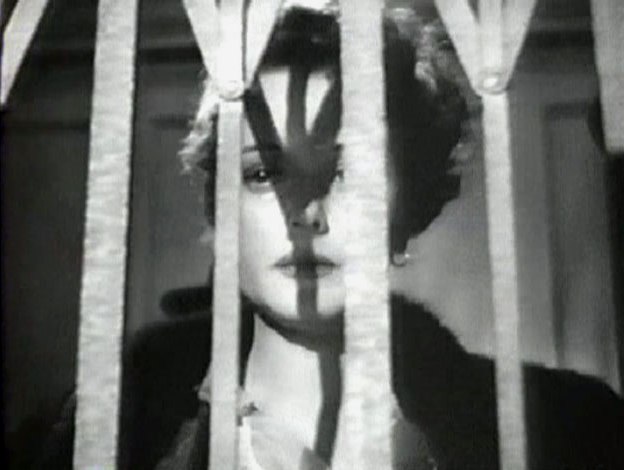
She rejects the role of wife and mother; this transgression of societal norms leads to her destruction.
She may also be a victim, caught in a situation from which she cannot escape.

The figure represents a critique of normative ideas about women.
Daphne Monet:
Femme fatale & Mystery of Identity
Femme fatale & Mystery of Identity
“She had
light hair coming down over her bare shoulders and high cheekbones and eyes
that might have been blue if the artist got it right. After starting at her for
a full minute I decided that she’d be worth looking for if you could get her to
smile at you that way.” (25)
“Her face
was beautiful. More beautiful than the photograph. Wavy hair so light brown
that you might have called it blond from a distance, and eyes that were green
or blue depending on how she held her head.” (96)
Daphne as tragic
mulatta
A tragic mulatta is a stereotypical fictional character that
appeared in American literature during the 19th and 20th centuries.
The
"tragic mulatto" is an archetypical mixed race person (a
"mulatto"), who is assumed to be sad or even suicidal because he/she
fails to completely fit in the "white world" or the "black
world." In the novel Mouse says about Daphne:-“She wanna be white. All
them years people be tellin’ her how she light-skinned and beautiful but all
the time she knows that she can’t have what white people have. So she pretend
and lose it all. She can love a white man but all he can love is the white girl
he think she is.”
Like the typical tragic mulatta Daphane is depicted as the
victim of the society he/she lives in, a society divided by race. They cannot
be classified as one who is completely "black" or "white" so suffer identity crises and deep racial trauma.
The plot and of the tragic mulatta is a tragic one. It goes as
so- A woman who can "pass" for
white attempts to do so, is accepted as white by society and falls in love with
a white man. Eventually, her status as a bi-racial person is revealed and the
story ends in tragedy- (either in her suicide, her death or a similar fate).
Often such stories are criticised because they are seen as
appealing to a white audience rather than focusing on the history of the
African-American community. Mosley uses the story of passing / crossing over to
investigate black/white and other race relations and also to explore
internalised racism.
To sum, the novel is about interrogating and investigating identity and race relations in Post-war America.
To sum, the novel is about interrogating and investigating identity and race relations in Post-war America.
W.E.B. Du Bois, Souls of Black Folk
Subscribe to:
Posts (Atom)