Monday, 27 January 2014

Exploring Parent/ Child Relationships in Khaled Hosseini's Kite Runner


Hosseini portrays and contrasts many different forms of parent/ child relationships in The Kite Runner, from the main protagonists, Amir and his tenuous relationship with his father, ‘Baba’. To Hassan’s contrasting, tender relationship with his father Ali. Through the exploration of these relationships Hosseini stresses the importance of parent/child relationships and the consequences of lack of love and neglect, the child can become insecure and in Amir’s case, his attempts of trying to win the father’s affection lead to devastating consequences.

1Harvey Freedenberg remarked that a ‘source of tension in Amir’s life is his relationship with Baba, his hard-driving and demanding father. Desperate to win his father’s affection and respect...’ This is a very accurate representation of Amir and Baba’s relationship, as Baba is indeed the ‘demanding’ father, expecting more of Amir than possible, while young Amir is an insecure child vying for his father’s attention. An example of this can be seen through Baba’s indifferent response when Amir beats all his classmates in a poetry game, an aloof reaction which is no surprise to Amir.

The relationship between Amir and Baba is very precarious, principally arising from the disparity of the character’s attributes. While Baba is a strong, overshadowing extrovert character described as: ‘a towering/ Pashtun specimen with a thick beard, a wayward crop of curly brown/ hair as unruly as the man himself, hands that looked capable of up-rooting a willow tree…’. That coupled with Baba’s nickname ‘’Mr. Hurricane’’ Hosseini gives the reader the image of an overpowering man that commands attention with his presence. In contrast Amir, is described as an introvert and unsociable character, more likely to be reading books or ‘‘shuffling around the house like he’s lost in some dream.’’, behaviour that Baba does not understand. Baba feels Amir lacks the active masculine qualities, which he as a child displayed, as Baba was athletic as a boy and as a result is very disappointed that Amir prefers reading poetry than playing Baba’s favourite sports, such as football. These completely opposing character traits make it difficult for Baba to bond with Amir; which is why Baba, would rather work and spend time with Rahim Khan, than spend time with Amir, resulting in the young Amir, to sometimes wonder ‘why it was always grown-ups’ time with him.’ The italicism of ‘always’ puts emphasis on the word to illustrate the minimal time Baba spends with Amir but also puts a whining tone in the sentence to capture his child-like voice. Nevertheless it is apparent that Amir is desperate for his father’s love from the beginning, as Amir’s desire for love is also rooted in Amir’s first word: ‘Baba’.

Baba’s neglect of Amir leads to him being an insecure child this can be seen through the imagery that Amir would sometimes sit outside his father’s office with his ‘knees drawn to [his] chest ‘for an hour, sometimes two, listening to their laughter, their chatter’. The image of Amir in the fetal position; is an image of an insecure child and shows Amir’s desperation for love and attention. His desperation is also shown in Amir’s attempts to captivate his father’s attention through any means possible, it prompts Amir to pronounce: ‘I think I have saratan.’ A declaration, that he thinks he has cancer, is a desperate cry for attention, to get some kind of caring response or reaction from a father who has been ignoring him nearly all his childhood. Baba’s response to Amir’s declaration is far removed from the caring response Amir hoped to gain, as he continues to ignore Amir. It is due to this indifferent treatment, which leaves Amir craving for his father’s attention and resolves him to winning the kite flying tournament, leading him to commit the first of his ‘unatoned sins’.

After winning the kite tournament, although Amir wins and forms a bond with his father, Amir is still unhappy because his victory is tarnished by the fact that he stood by and did nothing, while Hassan was assaulted. Amir is also aware that, although his relationship with his father has improved for the moment; if he divulges to his father, that he witnessed Hassan being assaulted and failed to act, he knows that present bond with his father could be broken like the fragile kite made of paper and bamboo. However despite Baba remaining oblivious to Amir’s cowardice, of leaving Hassan to the mercy of Assef that winter, Baba and Amir’s relationship still deteriorates after a brief period of respite, where they allude themselves that they were both happy in each other and they’d deceived themselves ‘into thinking that a toy made of tissue paper, glue, and bamboo could somehow close the chasm between [them].’ The use of the word ‘chasm’, to describe their relationship, echoes, suggesting the gulf between them is too big to repair, especially since they both keep important secrets from each other.

Amir’s frequent; fragmented dreams of Baba wrestling a bear and Amir’s inability to differentiate the bears form, from his father’s, illustrates that Amir sees Baba as a strong heroic figure. It is also evident that Amir is continually proud of his father and that he is son; this is illustrated by Hosseini through Amir’s internal monologue: ‘Everyone agreed that my father, my Baba, had built the most beautiful house in Wazir Akbar Khan district,’ the repetition of ‘my father’ demonstrates that he is publicly proud of being Baba’s son because his father is a well-respected, rich businessman. Yet behind closed doors their relationship leaves a lot to be desired, as even the beautiful house in Wazir Akbar shows their distant relationship especially through photographs displayed around the house as Amir describes: ‘Baba and his best friend and business partner, Rahim Khan, standing outside our house, neither one smiling- I am a baby in that photograph and Baba is holding me, looking tired and grim. I’m in his arms but its Rahim Khan’s pinky my fingers are curled around.’ This picture reveals an accurate state of their aloof relationship that, as even though Baba was his true father, Amir was always closer to Rahim Khan because Rahim Khan provided the attention and encouragement, which he never received from Baba. In this respect it can be said that Rahim Khan provided a better father-figure role for Amir than Baba, since just as a good parent should, Rahim Khan encourages Amir’s literary talents as a child, also standing by him and encouraging him to talk of leaving Hassan in the alley, something which seems Baba would seem unlikely to do as he possesses strong morals and would be disgusted of what Amir had done. Furthermore, Rahim Khan provides Amir with a chance to atone for his past sins.

However as 2Mary Whipple pointed out The Kite Runner is not just a story ‘of Amir and Baba. It is also the parallel story of Hassan and Ali, their servants, who represent an entirely different world’. As Hassan and Ali are Shi‘ah Hazzara’s, in contrast to Amir and Baba’s Sunni mainstream Pashtun heritage, they are seen as in the bottom rungs of the Afghan social ladder and are seen to have been persecuted throughout history, which is why Baba’s association with an Hazzara woman, even if she was not married, would still have be seen as very controversial. The controversy surrounding Hazzara and Pashtun relationships in Afghanistan can be characterized by Rahim Khan’s description of, the look of disgust and horror ‘on [his] fathers face when [he] told’; them he intended to marry a Hazara woman. Rahim Khan’s remark that: ‘in the end the world always wins’ indicates that their division in their race as well as religion cannot be overcome, as no matter what; a Hazara can never be regarded as an equal to a Pashtun in Afghan society even if they ‘fed from the same breast’
 

The Hazara’s low status in Afghanistan is demonstrated through Hassan and Ali’s menial positions in Baba’s household but also more harshly revealed through Assef’s fascist and xenophobic behaviour towards Hassan, who he believes, is not a “true Afghan” because Hazara’s descended from Mongolian invaders of the 13th century and are therefore distinctive in their features. Despite Assef’s ironic animosity and the community looking down on Hassan and his father Ali, they both accept their inferior positions in society. Hossieni poignantly demonstrates this through the parallel drawn between the ‘look of acceptance in the animal’s eyes’ being slaughtered, put adjacent to the look of ‘resignation’ in Hassan’s eyes. Hassan’s quiet acceptance to being raped by Assef can symbolize the submission of the Hazzara people as a lower race in Afghanistan throughout the years, from the Russian occupation through to the tyrannical rule of the Taliban who mass slaughter the Hazzara race.


Although the reader does not get an in-depth view of Hassan and Ali’s relationship, we get the impression that they have a much closer father/son relationship in contrast to Amir’s relationship with his father. Ali, in comparison to Baba’s rough attitude is described as ‘gentle’ and honourable, who expressed his emotions through his eyes as he ‘had a congenital paralysis of his lower facial muscles’. Although we are told by Rahim Khan that Hassan was Baba’s son, making him Amir’s brother, we get clues that Hassan is more than a just an ‘illiterate Hazara’ servant to Baba before it is revealed to us, specifically the event where Baba pays to get his lip-cleft removed, a present which seems unorthodox and leads us to question the true nature of their relationship. However despite Hassan missing out on the wealth of growing up in a mansion and instead living in a hut ‘on the south end of the garden, in the shadows of a loquat tree’ and not raised by his biological father, he receives better emotional care, in terms of love from Ali who ‘found his joy, his antidote’ in Hassan and it can be said that Hassan is a better person than Amir, as he is loyal, honest and according to Amir: ‘pure’. 
 

It can also be argued that it is Hassan’s good nature led him to forgive Amir, for not helping him, when he was assaulted, because Hassan understood the emotional neglect that Amir felt as a child. His understanding is presented by Hosseini through Amir and Hassan’s shared like for the story ‘Rostam and Sohrab’, in which the son ‘Sohrab’ unknowingly gets killed by his father ‘Rostam’, which may move Hassan ‘to tears’ so much because he can recognize Amir in the character of ‘Sohrab’. As just like ‘Sohrab’, Amir similarly is desperate for his father’s love but lacks the much sought after love; of his father, which Hassan is aware of because as Amir pointed out ‘Hassan always understood about [him]’, which could be argued is the reason why Hassan names his son Sohrab as a sign of forgiveness towards Amir.

However Amir and Baba’s relationship does improve a little when they move to America. Although it does not make Baba more supportive of Amir’s choices as Baba is very disappointed by Amir’s decision to become a writer because he does not believe its ‘real work’, however Amir sticks by his decision as he expresses that: ‘I didn’t want to sacrifice for Baba anymore’, as the last time he strove to make his father approve of him he had betrayed Hassan. In a way the relationship between Soraya and Amir’s relationship with their father’s are very similar, as both were emotionally neglected by their fathers, which is why Amir tried to strive for his fathers affection, while Soraya rebelled against Afghani custom by running away with a man. Both their fathers also seem to separate themselves from them, as Soraya explained of her fathers constant alienation, of himself from the family, while Baba also neglected Amir as a young boy. The Generals attitude towards Soraya’s chosen profession is also parallel with Baba’s attitude to Amir’s, as the General expresses his preference of her choosing a more prestigious job of being a lawyer rather than a teacher.

Through Amir’s one-sided narrative, the reader is given the sense that Baba is completely responsible for Amir’s wrongdoing as he says: ‘I didn’t want to sacrifice for Baba anymore. The last time I had done that, I had damned/ myself’. It can be seen as unjust that all Amir’s blame is placed on to Baba however the blame is not unexpected because the first- person narrative, although a very successful device for Hosseini to get across Amir’s childhood insecurities and feelings of abandonment, by his father, it tends to dominantly relate events from Amir’s biased perspective.Therefore it can be argued that Baba is not all entirely to blame for his distant attitude and behaviour towards Amir. As his attitude can be attributed to the fact that he himself never had a father-figure, as he lost his father at a very young age, which can be said, is why Baba did not know how to be a father to Amir.


Furthermore Baba’s reserved attitude can also be attributed to the ‘Afghan culture’. As culture is a dominant factor that permeates Afghanistan, since in Afghanistan; how children are brought up is largely rooted in their culture and Afghan culture is one that is based on traditional values. The women are expected to be demure, virtuous and modest while the men are expected to be masculine, athletic and proud. As Amir, contrary to Afghanistan culture and also Baba’s nature, is not athletic. Baba; therefore is unaware and unsure about how to connect with the placid Amir. He is particularly, unsure at one point, how to react to Amir crying at a game ‘Buzkashi’- a violent game that is an Afghanistan national passion. Amir’s tears, which are considered un-masculine, both made Baba feel uncomfortable and exasperate him.

However Baba, who was overtly masculine, shows that he cared for Amir in the only way he knew how, which was materialistically, as he provides Amir with the best education and tries to give him the best of everything, such as organizing Amir’s birthday and all Amir gives Baba is an unappreciative ‘half-hearted’ acknowledgement. What's more following the Russian invasion Baba was forced to evacuate from his beloved Afghanistan where he was greeted by people ‘who knew him and his father’ and was well-respected, to America where he was unknown, primarily to ensure that Amir was safe.

Moreover Baba also showed what a good father he was by working in a menial labourer job, once they move to America so that he can support Amir through his studies. It is obvious that Baba worked hard in his job, as Baba’s ‘grubby and calloused’ hands are a contrast to Amir’s ‘clean and soft’ student hands. Therefore after all his sacrifices, it is understandable that Baba questions and is somewhat skeptical of Amir’s uncertain career choice as a writer.


It can also be held that Amir himself is flawed, in that he is essentially a selfish and self-centered character, as all his thoughts revolve around himself, even when his father is about to get shot Amir’s internal dialogue is concerned with himself as he protests ‘what about me?’, displaying that he is, in nature, selfish character. Although it can be argued that Amir’s selfish attitude is a product of his up-bringing it can be said Amir’s egotism is innately great, as even after the event where Hassan is raped Amir’s thoughts are solely about the kite and he honestly admits that: ‘I can’t lie now and say my eyes didn’t scan for any rips’. Despite Hassan’s ordeal and his loyalty, Amir disregards him, as he is only concerned about himself; however he is not without a conscience and Hassan’s unwavering words: ‘For you a thousand times over’ haunt him throughout his life.

Bad judgments are also made by Amir, concerning his care for Hassan’s son, Sohrab; especially when Amir naively promises Sohrab that he will never go to another orphanage, resulting in Sohrab attempt to commit suicide, when Amir goes back on his promise. Sohrab spilled blood is not only congruent to Hassan’s blood, in the earlier chapter, after he was raped but is also symbolically representative of the loss of innocent childhood in Afghanistan and the hardships they face. As Hosseini aims to shed light on the uncertainty and instability of the lives of the children of Afghanistan, something which; is seldom conveyed in literature regarding Afghanistan. Hosseini also serves to further highlight the instability of Afghanistan; this is particularly reflected in the ominous end to chapter, reinforced by the caesura, where Amir claims: ‘suddenly Afghanistan changed forever’. The first gunshots fired in the streets Afghanistan serves to highlight that, where once a sound so foreign, is now, at present a regular occurrence, which the people of Afghanistan face and a sound that now the children: ‘would know nothing but the sound of bombs and gunfire’.
In conclusion it is clear that Baba and Amir’s relationship was one that even if Amir was the son Baba had ‘imagined’ Baba would still be reluctant to have a relationship with him, as Baba’s secret fathering of Hassan haunts him and distances him from Amir. Hosseini effectively creates two characters, through the relationship of Baba and Amir, where mistakes echo to the next generation demonstrating how adults’ present mistakes affect the younger generation. It is unclear whether Amir’s mistakes will also subsequently affect Sohrab as Hosseini’s leaves the reader with an open ending, where the reader can speculate the ending. However the resonance of Amir’s words of: ‘For you a thousand times over’ echoes as an spoken promise that he will stand by Sohrab and return the loyalty he was shown by Hassan and Sohrab’s counter smile indicates that there is hope for Amir and Sohrab relationship, will not reiterate that of Amir’s and Baba’s. The ending not only inspires hope for Sohrab and Amir but also for Afghanistan, the land that they love. 


Some of the pictures are from the 2007 adaptation of the novel. I sincerely recommend watching it; usually I prefer books to reading so it is very rare when I actually like a film so much more than a book like I did with Marc Forster adaptation of Kite Runner; I think he did an amazing job so go and watch the film after you read the book. 

The Romantics on Nature

Rough notes I wrote many, many light years ago on Coleridge and Wordsworth, so if it is a bit immature in some places or there are a few disjointed sentences don't judge me too harshly.

The concept of nature and imagination were extremely important to Wordsworth, Coleridge and many of the Romantic poets. This is especially evident in ‘The Nightingale’, where Coleridge reflects on natures association with man- more specifically it’s disassociation and also evident in ‘lines written a few miles above Tintern Abbey’, which celebrates Wordsworth’s return to the Wye valley, which he had visited five years previously when he was on a walking tour, with his sister Dorothy. The importance of nature is presented in both poems through the use of language to convey the idea and themes of nature as soothing, spiritual presence; beautiful in vision and more importantly the importance nature has in inspiring joy.

The concept of nature is evident in Wordsworth’s ‘Lines written a few miles above Tintern Abbey’, as the whole first verse of the poem gives the reader an in-depth commentary of the rustic scenery, in which the speaker, Wordsworth recites the features of the landscape such as: ‘The sea waters, rolling from their mountain-springs’, presenting nature as peaceful and serene. As he then continues to behold the effect of ‘Which on a wild secluded scene impress’ upon him ‘thoughts of more deep seclusion’. The alliteration of the ‘secluded scene’ portrays the sparse cliffs and serves the purpose of putting stress on the word ‘impress’ to emphasize the strong, impressionable effect of nature has upon him.

Nature is also presented as providing a strong and soothing affect on Wordsworth in the ‘lonely rooms, and mid the din/ of towns and cities’, where the memories and images he conjures up in his weariness can be ‘felt in the blood, and felt along the heart,/ And passing even into my purer mind/ with tranquil restoration’. Both the images of the images of ‘blood’ and ‘heart’, invoke a strong and active images of life as the heart is mostly associated with being alive, giving the impression that the images of nature revive him, as well as calm his senses. There is also a strong image of nature ‘In which the burthen of mystery’, which weighs heavily upon at times is lightened. The use of language of ‘burthen’ also puts emphasis on the word weighing it down, only for the word ‘lighten’d’, lightening the mood giving us a sense of uplifting and freedom from troubles.

Nature is also presented as a sublime spiritual presence causing joy is apparent as his present memory of his past experiences of the surroundings float over his present view of these memories, and he feels bittersweet joy in reviving them. As nature is as important as ‘That in this moment there is life and food’, the strong reference to these images of nature being compared to having the same importance as food is fundamental in explaining Wordsworth’s feelings on how highly he values nature.

‘The Nightingale’ is also similar in the portrayal of nature as joyous and an important aspect of life as Coleridge portrays the fact that just because the ‘Nightingale’, which is a bird that is usually heard at night and is usually referred to as ‘melancholy’ by some in forms of literature, it is not always the case.  The Nightingale bird is an important symbol of a part of nature and Coleridge uses it to get his point across that, the problem of man’s disassociation with nature.

Coleridge also gets his point across through the structure of his poem, although it has been criticised for being formless, I disagree that this makes the poem inferior because the fact that it’s named a ‘conversational poem’ and unstructured makes the poem more reflective and emphasises the fact of ‘inner debate’ he has with himself, getting the reader thinking about his point.

The strong graphic visual imagery Coleridge also creates, through introducing the elements of the Gothic adds a sense of mystery and creates an unearthly atmosphere as Coleridge adds ‘which the great lord inhibits not’. Giving the castle a secluded feeling, but also the vision of the ‘most gentle maid’ who ‘Glides thro the pathways’ reinforces the mystery and gives the reader the sense that nature is being worshiped.

The use of language to describe the joyous beauty of the birds of the singing is also effective in creating an exciting feeling as they all ‘Have all burst forth in choral minstrelsy’. As there is a strain on the words ‘bust forth’, highlighting the dramatic and sudden sound. This feeling of  suddenness is personified through the ‘tipsy Joy that reels with tossing head’, giving an image of ‘Joy’ almost being drunk with happiness.

Overall these dramatic devices serve to present nature as well as its importance as can be seen through Coleridge’s portrayal of nature as essentially joyous and should inspire joy and other human feelings and serving to project these human feelings. It is this lesson Coleridge hopes to instil in his child, those poets and people who describe the Nightingale as ‘melancholy’ have yet to learn it.

Sunday, 10 November 2013

Pre-Raphaelite's on Literature

Proserpine goddess of vegetation


Dante Gabriel Rossetti's Proserpine


Afar away the light that brings cold cheer
Unto this wall, – one instant and no more
Admitted at my distant palace-door
Afar the flowers of Enna from this drear
Dire fruit, which, tasted once, must thrall me here.
Afar those skies from this Tartarean grey
That chills me: and afar how far away,
The nights that shall become the days that were.
Afar from mine own self I seem, and wing
Strange ways in thought, and listen for a sign:
And still some heart unto some soul doth pine,
(Whose sounds mine inner sense in fain to bring,
Continually together murmuring) —
'Woe me for thee, unhappy Proserpine'.
— D. G. Rossetti
Shakespeare's Ophelia from Hamlet

John Everett Millais - Ophelia - Google Art Project.jpg
Sir John Everett Millais' Ophelia 


Gertrude's announcement of Ophelia'death: 


There is a Willow growes aslant a Brooke,
That shewes his hore leaues in the glassie streame:
There with fantasticke Garlands did she come,
Of Crow-flowers, Nettles, Daysies, and long Purples,
That liberall Shepheards giue a grosser name;
But our cold Maids doe Dead Mens Fingers call them:
There on the pendant boughes, her Coronet weeds
Clambring to hang; an enuious sliuer broke,
When downe the Weedy Trophies, and her selfe,
Fell in the weeping Brooke, her cloathes spred wide,
And Mermaid-like, a while they bore her vp,
Which time she chaunted snatches of old tunes,
As one incapable of her owne distresse,
Or like a creature Natiue, and indued
Vnto that Element but long it could not be,
Till that her garments, heauy with her drinke,
Pul'd the poore wretch from her melodious lay,
To muddy death.

- Hamlet Act IV scene 7 


The Lady of Shalott 


Hunt's Lady of Shalott


She knows not what the curse may be,
And so she weaveth steadily,
And little other care hath she,
The Lady of Shalott.
- Alfred Tennyson


Saturday, 26 October 2013

Wuthering Heights Ooops I Mean Twilight!

Although I will be reviewing Twilight, a stand alone text in a  separate post, this post is more about the stark similarities between Stephenie Meyer's Twilight and Emily Bronte's Wuthering Heights, so let the comparisons begin:

Apparently the story of Twilight came to Stephenie Meyer in a dream. However, after finishing this veritable tombe of teenage angst and empty melodrama I have my suspicions that this dream was induced after Mrs Myer finished reading or watching Emily Bronte's Wuthering Heights. For anyone like me, who had the misfortune to read that awful book for A level English, the strong similarities with Bronte's novel are far from welcome ones.


Replace the soda can with a copy of  Wuthering Heights and you'll understand how I feel 


Characters: 

Bella/ Cathy
Edward/Heathcliff
Jacob/Linton

Jumble these names up a bit, give them sharp incisors and we have Twilight.

Bella/ Cathy 

Our protagonist is Bella Swan who we can presume, since she is stuck between two guys, is the Cathy figure in Meyer's text. Unfortunately this is where the similarities between the two characters end. While Cathy is portrayed and actively demonstrates that she is a strong, wilful character (i.e. by making her own choices, selfish as they may seem) Bella on the other hand is happy to sit back in relative inferiority and let her over-protective vamp boyfriend make all her decisions (this is where feminism takes a beating).


Bella fulfilling her potential 


Edward/ Heathcliff

Strangely I liked the Heathcliff in Bronte's novel, although he seemed quite dangerous and animalistic, there seemed to be a kind of vulnerability about him. Come on! He was possibly abandoned by his family and so has no real roots except that is Cathy,  so we can cut him a little slack when he gets finds that the love of his life, his 'soul mate' has married another. Alas Meyer's Edward has no such real depth, despite being similar to the 'monster-like' Heathcliff -simply because he is a monster, with him being a vamp and all- there is no real substance beneath the model-like looks (despite Meyer half-heartedly trying to throw in some cliche history of him coming from England) in the end he's more vanilla than Cathy's rich husband, Linton.


Even Alice is bored but to be fair she is used to talking rabbits.

Jacob/ Linton  

Hmmmm! Not much similarities here except their both second best so I feel sorry for them both. Jacob is clearly meant to be portrayed as a hot than hot werewolf and of course like all the attractive guys in Forks he inevitably fall for Bella because....? Honestly I don't know why he falls for her or why Edward does for that matter (except in Edward's case it's kinda explained through the fact that he likes her smell.....? Ok so that's not weird at all). Anway Jacob seems to genuinely like Bella and they have very normal albeit boring and awkward conversations where Jacob tries to make a move on Bella, she keeps knocking him back and he bounces back to her like an eager puppy determined to be loved.


Setting: The Moors/ Forks 

The depressing rainy setting of Twilight's setting, Forks took me back to the depressing, rainy moors that Heathcliff and Cathy loved so much. Just thinking about it gives me chills- and not in a good way.


The Romance: 

 Cathy + Heathcliff  
          vs.
 Bella + Edward 

I never understood as to why Cathy and Heathcliff's romance was considered comparable to the greatest literary romances of all time (like Romeo and Juliet, Elizabeth and Mr Darcy, Margaret Hale and Mr Thornton and so on). Both Cathy and Heathcliff are incredibly selfish (see Cathy's stupid decision to marry Linton even though she declares Heathcliff as her soul mate), self-destructive (particularly Cathy who although has made her choice to marry Linton, so she can live comfortably, annoyingly continues to bitch and moan and simply won't lie in the bed she made, instead continuing to try and have both her lovers within reach), cruel (both Heathcliff and Cathy are mean to animals and the people around them) and finally they are downright annoying with their tragically forced tale of woe and heartbreak- these two take brooding to a whole new level.

Bella and Edward's relationship is equally self destructive and disturbing. Most of the story is Edward trying to tell Bella that they can't be together; mostly because if they do become a couple he'll lose control and end up biting her and sucking her dry because he's a vampire and she has nice smelling blood or something. Oooh I forgot to mention he can also read minds- yep he's Mystic Meg or something- however he cannot read Bella's mind (lucky for her as all he'd probably hear a variation of "OOOH Sparkly!"or  "EEEK! I don't care if he kills me he's just so damn hot *drool*"  Then her boring ass would get dropped before her drool touches the floor.Another thing which is equally disturbing and comparable to Wuthering Heights is the fact that Cathy's dead= while Edward is the undead and just as Cathy appears as a ghost and tries to get through the window of her bedroom= in turn Edward seems to creepily watch and enter Bella's room through her window. I'm going to assume that the window is the threshold to the supernatural world.

Anyway I'm going to end it here. If you have spotted any Wuthering Heights similarities I would love to hear about them so drop me a comment below. Thanks.

Was Joseph Conrad a racist?

Was Joseph Conrad a racist, more specifically does his novel Heart of Darkness reveal him as a racist? Below is an essay, written by me, very inadequately exploring that very question:


Joseph Conrad’s Heart of Darkness is a product of the experiences of Conrad’s six-month visit to the Congo Free State in 1890, which are related by Conrad through the character of Marlow, who retraces Conrad’s footsteps. When Heart of Darkness was first published, in 1902 “as a three- part series in Blackwood’s Edinburgh Magazine[1] few actually spoke about it. Compared to the popularity Conrad received from his story, Youth, which fit into the canon of Victorian adventure stories of the time, such as Treasure Island. It wasn’t until “the late 1950s and 1960s peaking in the late 1970s”[2] that Heart of Darkness gained attention. The novel is known for the notable attention it gained from Nigerian novelist, Chinua Achebe who provoked many responses when he attacked the novel for being racist. Thus this essay will look at how Heart of Darkness explores and negotiates race and racism by looking at the representations of both Africa and African people and whether these representations are in fact racist.  

In some aspects it can be said that Conrad’s portrayal of the Congolese people, in the novel, is indeed racist. This can be seen in the imagery Conrad uses to describe them, as Marlow expresses, “It was unearthly and the men were…No they were no inhuman. Well, you know, that was the worst of it – the suspicion of their not being inhuman. It would come slowly to one. They howled and leaped and spun and made horrid faces, but what thrilled you was the thought of their humanity – like yours – the thought of your remote kinship to this wild and passionate uproar.”[3] This quote clearly paints the African’s as primitive to the point that their humanity is questioned, it perpetuates offensive image of Africa and the African people, as the “Other” separate and inferior from himself and the civilized West.  

Furthermore there is the arrogant, underlying imperial ideology, in Conrad’s discourse, that the African’s are indeed in need of racial improvement. This view can be seen in the description of an African man, as “an improved specimen; [who] could fire up a vertical boiler. He was there below me and, upon my word, to look at him was as edifying as seeing a dog in a parody of breeches and a feather hat, walking on his hind legs.” (p.51). This quote displays the “imperial[ist] ideology, which encouraged colonial powers to take up the “white man’s burden” and raise up the condition of the inferior races”[4], which is quite clearly derogatory and racist, as Conrad dehumanizes and denigrates the African intellect.

Similarly, the language in Heart of Darkness can also be seen as racist, especially, as Achebe cited, through the noticeable repetition of “darkness.” Achebe pronounced Conrad’s use of the word “darkness” is used derogatorily to describe Africa, as Europe’s “primordial relative.”[5] I tend to agree that the repetition of the word is a form of unconscious racism, which associates white with all things good and pure and black with all things bad, uncivilized and demonic.

Furthermore, Heart of Darkness is not only racist but it also betrays xenophobia, through Marlow and the pilgrims’, towards African cultures and customs, as Conrad wrote, “The earth for us is a place to live in, where we must put up with sights, with sounds, with smells, too, by Jove! - breathe dead hippo, so to speak, and not be contaminated.” (p.69) Although he preaches tolerance, he also suggests that contamination is possible through the interaction of the dominant European culture, with different cultures. There is also a sense of underlying fear that runs thought the novel of unexplained practises by the African’s, such as re-occurrence of the “roll of drums”(p.49), in the forest and the supposed witchcraft and cannibalism. These practices scare Marlow and the pilgrims’ not only because they lack the cultural knowledge to understand these practises but also because it is not in line with their culture, which is the dominant culture.

This dominant culture relies not only on the established of the notion of race, which involves the “classification for human beings into physically, biologically and genetically distinct groups”[6] but it also involves looking at cultural practices which are not favourable and imposing their dominant culture upon the inferior culture, with the perceived notion their culture is superior. This can be seen happening in Heart of Darkness, where they train an African man to fire up a boiler and also in their failed attempt to build roads but also closer to home in Ireland as “the Irish were initially seen to be physically much the same as the English, [but] Irish culture was [seen as] alien and threatening.”[7]  And where a culture is seen as unfavourable it is usually squashed by the West through violence, as Samuel P. Huntington said: “The West won the world not by the superiority of its ideas or values or religion but rather by its superiority in applying organised violence. Westerners often forget this fact, non-westerners never do.”[8] 

On the other hand Conrad’s Heart of Darkness can be seen a deliberate racism with the intent to provide a critique on the western claim to superiority. While some cite the racism in Conrad’s Heart of Darkness as a direct result of Conrad being a product of Western culture, which propagates the idea of the superiority of white culture through books and even science, which is seen in the novel where the doctor “measure[s] the crania of those going out [to the Congo]”.(p.15) Conrad could be seen as contesting this assumed power by presenting all the West’s racially prejudiced views in full and showing them that to take away land “from those who have a different complexion or slightly flatter noses is not a pretty thing when you look into it too much.” (p.8) Conrad also shows this through Marlow’s lack of answers from Kurt, as Marlow finds that there is no ‘redeemable idea’ (p.8) that can justify the kind of behaviour occurring in the Congo

This is further shown through the stories attempt to challenge the savagery of the African culture, when Marlow reminds us at the beginning that England must have seemed savage and barbaric to the Roman’s, who saw it as nothing but a black space to be conquered. But also in Kurt’s report that the whites themselves “must necessarily appear to them [savages].”(p.70) Conrad shows the reader that culture is relative and in the end it is not culture which makes people savage but the actions of people who try to exploit and conquer those for their own ends, like Europe has done to Africa. This idea is epitomized in the character of Kurtz, where it is not his engagement with African culture that kills him but his fanatic obsession with “[his] ivory” (p.68). 

Alternatively, the use of the word “darkness” can also be said not to carry racist implications, used to debase Africa and its people, as Achebe alleged. Since, the word is used, not only when Marlow is in Africa but also used in the story to describe England, at the beginning and is also repeated at the end when Marlow is in London to see Kurt’s widow, where Marlow comments, “The darkness deepened” (p.107). This ending is key to the understanding the use of “darkness”, as the room becomes oppressive and “The darkness deepen[s]” (p.107) Marlow has two choices, to either tell Kurt’s wife the truth about his last words and tell her the whole story or to just lie and leave. Although Feminists would argue that Marlow’s choice to lie, is patronizing and perpetuates the fragile female stereotypes who are “out of touch with the truth” (16) and should be protected. An alternative response is that, Marlow choose the easy way out in an attempt to get away and leave behind the whole dark corrupt business of taking people’s land, enslaving and killing them. Thus, the darkness can be seen as a symbolic shadow that hangs over the whole business of colonization and of the moral corruption Marlow has suffered from witnessing this exploitation.

Additionally, Conrad can be seen to sympathise with the “unrestrained grief” (p.60) African’s suffer under imperialism, perhaps because as some post-colonialists suggest; Conrad himself suffered from displacement, as a child, from his homeland, Poland. Thus post-colonialists attribute the ambiguity of the novel to Conrad’s own ambiguous nationality. Then again, the ambiguity of the novel and in particular its language could be credited to Conrad’s desire to relate the tale of his journey faithfully, including the thoughts he had when he suffered from a fever. Marlow relates, “I positively hoped, that my aspect was not so- what shall we say?- so unappetizing” (p.58). This delirious admission shows that perhaps at times Conrad, as Marlow, is an unreliable narrator, as Conrad “suffered psychological, spiritual, even metaphysical shock in the Congo, and his physical health was also damaged; for the rest of his life, he was racked by recurrent fever and gout”[9] Thus perhaps his representation of events are skewered.
 
To conclude, although I agree that in some cases Conrad shows a lack of care for the African plight and displays typical western racism of that time. However I think that it is only a small part of the picture and to focus on this feature would obscure the message. I believe that Heart of Darkness is ultimately not a novel that serves to degrade Africa but in fact it uses Africa, as a pawn, to reflect back upon the west’s imperialist attitudes and behaviour towards the colonized. As ultimately the prominent feeling after reading the novel is not shock of the African’s behaviour but that of the West.


BIBLIOGRAPHY

Primary Texts


Conrad, Joseph Heart of Darkness, London: Vintage, 2007. 


 Secondary Sources

Achebe, Chinua. "An Image of Africa: Racism in Conrad's 'Heart of Darkness'" Massachusetts Review. 18. 1977. Rpt. in Heart of Darkness, An Authoritative Text, background and Sources Criticism. 1961. 3rd ed. Ed. Robert Kimbrough, London: W. W Norton and Co., 1988.
Ashcroft, Bill. Gareth Griffiths and Helen Tiffin, Post-colonial Studies: The Key Concepts. London: Routledge, 2000.

Bloom, Harold. Joseph Conrad’s Heart of Darkness Bloom’s Guides. New York: InfoBase Publishing, 2009.

Encyclopaedia Britannia: Joseph Conrad Biography, http://www.library.eb.co.uk/comptons/article 9273778?query=joseaph%20conrad&ct=ebi (accessed: November 8, 2010).

Young, Robert J. C. Post-colonialism A Very Short Introduction.  Oxford University Press, 2003.


[1] Harold Bloom, Joseph Conrad’s Heart of Darkness Bloom’s Guides (New York: InfoBase Publishing, 2009), 17.
[2] ibid., 17.
[3] Joseph Conrad, Heart of Darkness (London: Vintage, 2007), 69.
[4] Bill Ashcroft, Gareth Griffiths and Helen Tiffin, Post-colonial Studies: The Key Concepts (London: Routledge, 2000), 201.
[5] Chinua Achebe. “An Image of Africa: Racism in Conrad’s ‘Heart of Darkness’” Massachusetts Review. 18.1977 Rpt. In Heart of Darkness, An Authoritative text, Background and Sources Criticism. 1961. 3rd ed. Robert Kimbrough, (London: W. W Norton Co., 1988), 251.   
[6] Bill Ashcroft, Gareth Griffiths and Helen Tiffin, Post-colonial Studies: The Key Concepts (London: Routledge, 2000), 201.
[7] ibid., 198.
[8] Robert J. C. Young, Post-colonialism A Very Short Introduction (Oxford University Press, 2003), 32.
[9] Encyclopaedia Britannia: Joseph Conrad Biography, http://www.library.eb.co.uk/comptons/article 9273778?query=joseaph%20conrad&ct=ebi (accessed: November 8, 2010).


Friday, 25 October 2013

Book Review: White Cat by Holly Black 

Hello all! So a friend of mine has recently given me a mountain of Young Adult fiction after my revelation that I consciously avoid YA fiction. Although to be fair it was not much of a revelation since my eyes usually glaze over when she tells me about the new 'big' thing in YA fiction. Its not that I hate YA fiction so much as the whole YA genre bores me to death. I find the plots predictable, the characters annoyingly immature and so I kind of just stopped reading them when I was about 16. However times change and so at the ripe old age of 21 and with some free time on my hands I have decided to jump back into the foray of YA fiction. You'll find out whether I regret this recursion below: 


The Novel: White Cat, first in the Curse Workers Series 

The Author: Holly Black 


The Cover: 


The length: 320 pages


The Genre: Fantasy, with a hint of romance. 

The Story: 

Cassel Sharpe is a seventeen year old from a family of 'workers', no, not the kind that you see on the street corner but in this fantasy world people who have magic abilities are known as 'workers'. All but itty bitty Cassel the youngest member of the Sharpe family seem to posses some kind of power, which is sad and inevitably leads to a semi- depressed, restless Catcher and the Rye, Holden-esque narrative where Sharpe feels out of place and excluded from his own family. 


Meanwhile the rest of his family use there abilities for bad: His absent mother can manipulate people by making them fall in love with her and so usually ends up in compromising situations because of it (one of them which is jail).


Not if Cassel's mother has anything to do with it...

His grandfather comes across an old mafia- type, his older brother has super strength and his other brother can alter memories- (all three of the guys in his family work for an influential crime family who use workers to do their dirty work). Thus the family of superheros is complete:


However nothing is ever that simple is it? With cool abilities come crappy responsibilities or in this case crappy 'blowbacks' which are serious repercussions to using your powers e.g. if you use your mind altering ability to alter someones memories you lose some of your memories; so you might one day end up trawling the streets not having a clue as to who you are. 


Anyway the plot centres around the boarding- school stranded Cassel and the weird dreams he has of a white cat, hence the title (but I won't spoil the significance of the cat). He also narrates the guilt he feels at killing his best friend Lila when they were 14 (there, there Cassel; I would feel guilty too). 

Theres also a kind of hierarchical structure within the story with some 'workers' abilities being more rare that others and so in turn being more sought after than others. Also like with most fantasy worlds where the people with abilities are outed to society there's a general mistrust with government seeing the workers as a threat as so there is a government vs. workers theme.                                                                                                                                             

Best bits: The Hogwarts-esque vibe you get from Cassel's boarding school and the magical element, which brings back bitter-sweet Harry Potter memories  (aaah! I miss Hogwarts days). 


  • The Holden- esque narrative (Catcher and the Rye is one of my favorite books so you can imagine how much I loved the writing style).
  • Cassel's childhood love and longing for Lila (sooo sweet)


  • Cassel's James Dean coolness. I like when the authors portray a character as too- cool- for- school (lol forgive me for my slip back to the 90's), we get a sense that Cassel is a cool dude (forgive me once again) not from what he says and does but from how others react towards him, which is mostly with fear or respect. He's also pretty much a lone wolf throughout most of the novel which enhances his coolness vibe.
    James Dean looking cool and smexy
Dislikes: 


  • I pieced things together a lot faster than Cassel so most chapters were spent being annoyed at Cassel's obvious stupidity. 


  • The subplot, which generally consists of a boringly awkward romance between his friend's Sam and Daneca.

Overall my first foray back into YA fiction was not too bad. I wasn't blown away by "White Cat" but I did like it more than I think I would so I'm glad I gave YA fiction another chance.  

The Verdict: 7/ 10 (Lucky my friend has had the foresight to include all three of the trilogy so I will be reading the next two) Toodles. 


Worth the read: Yes


Graham Greene Binge...


Innocence is a kind of insanity” 


The Power and the Glory 


Reading:
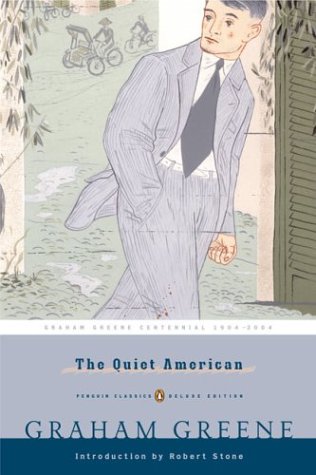
The Quiet American 


“You cannot control what you love--you watch it driving recklessly towards the broken bridge, the torn-up track, the horror of seventy years ahead.” 


Greene's The Heart of the Matter


Greene's Stamboul Train 
“Of two hearts one is always warm and one is always cold: the cold heart is more precious than diamonds: the warm heart has no value and is thrown away.”                


“She thought for the first time, with happiness: perhaps I have a life in people's minds when I am not there to be seen or talked to.” 


Brighton Rock 


“You cannot conceive, nor can I, of the appalling strangeness of the mercy of God.”